A buyer wants you to pay for a car check

A would-be buyer has asked you to pay for a vehicle history check on a website they've sent. Checking a car is the buyer's job, so treat this as a warning sign. Here's why, and what to do if you've already paid.

Who checks

Checking the car is the buyer's job

GOV.UK's steps for buying a used vehicle have the buyer ask the seller for:1

  • The registration number.1
  • The make and model.1
  • The MOT test number.1

The buyer then checks those against DVLA's records and the car's MOT history, and asks to see the log book when they come to see the car.1

Roadworthy checks tax, MOT and MOT history from scanning or entering a number plate.

Free, for Android.

Police advice to buyers is to do their own Hire Purchase Investigation (HPI) check online for outstanding finance, using a reputable company that offers some guarantee.2

Why would a buyer ask you to pay?

Checking the car is the buyer's job, and they can do it with what you give them: the registration number, make and model and MOT test number, and a look at the log book when they come to see the car.

The warnings from the US and Canada below describe this kind of request as a scam.

So don't pay, and don't enter your details on a site a buyer sends you. Offer the registration number, make and model and MOT test number instead.

If you've already paid or entered card details

First

  • Contact your bank or card company first. Report Fraud, the police's service for reporting fraud, says that's the first step if cards or online banking are involved.3

Then

Reported

What's been reported

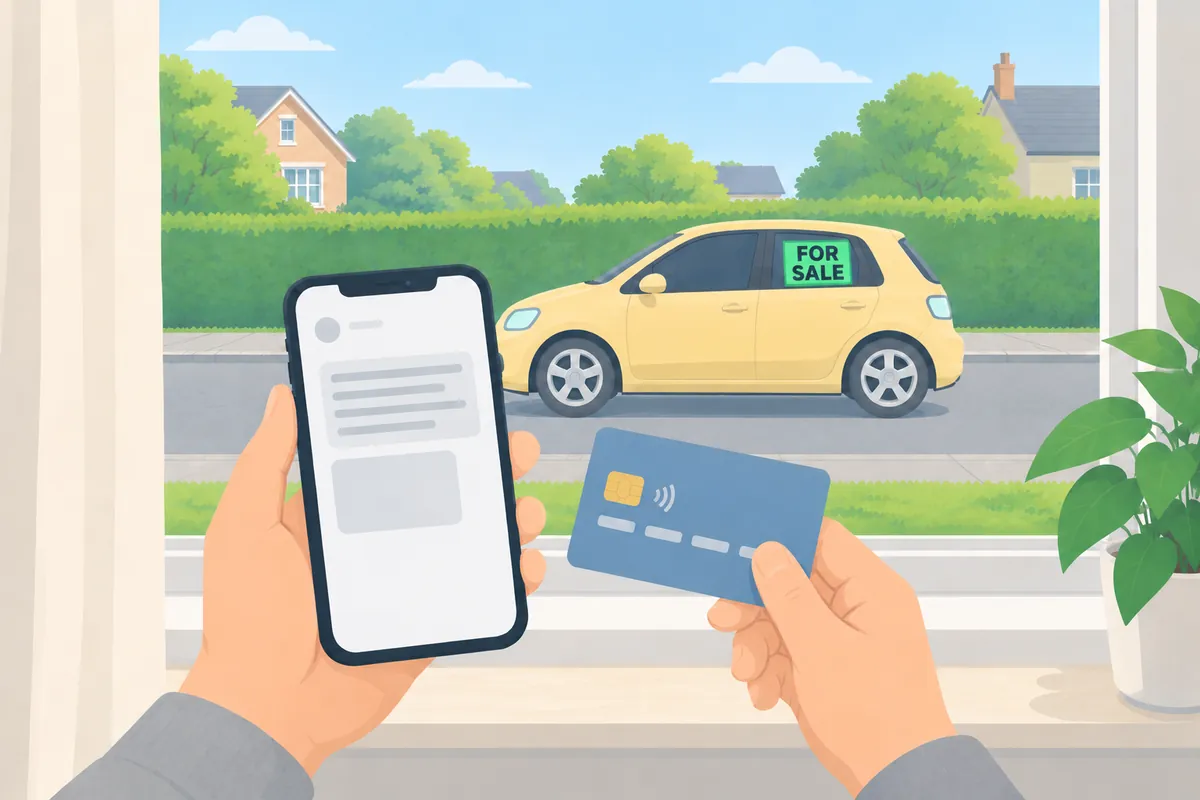
In 2018 the US Federal Trade Commission described this request: people selling a car online are contacted by someone who says they want to buy it, but first wants a history report from a specific website. The seller pays for the report, sends it, and never hears back.4

In the same 2018 alert, the FTC warned that you may have no way of knowing who runs such a site. It may be a way to get your personal information, including your card number, or to collect details that are sold on for advertising and marketing.4

In August 2025 police in British Columbia, Canada, warned of a similar approach on Facebook Marketplace: would-be buyers typically ask for a vehicle history report first and send the seller to a fraudulent website. They said the details a seller enters there could lead to identity fraud.5
Warning signs

Tricks to watch for

In the same 2025 warning, Canadian police list tactics criminals could use to trick you into giving personal information or clicking on links:5

  • Emails and website names made to look like someone else's.5
  • Urgency.5
  • Offers of refunds or money.5
  • Requests that seem harmless, to click links, download attachments or fill out forms online.5
  • Instructions to scan a QR code.5

Sources

  1. GOV.UK, Check a used vehicle you're buying
  2. Essex Police, Tips for buying a used car
  3. Report Fraud (City of London Police), What to do if you are a victim of fraud; How to report suspicious messages, calls and websites; Report Fraud
  4. US Federal Trade Commission, Steering clear of vehicle history report scams (October 2018)
  5. Royal Canadian Mounted Police, Ladysmith, Beware of phishing scam: vehicle history reports (1 August 2025)

First published 29 October 2026. Last updated 29 October 2026. General information, not legal advice.